Descrizione
Le abitazioni più aristocratiche sono quelle di palazzi ed edifici con stili e forme più “alla moda”, scartando quelle ritenute obsolete. Modelli urbanistici e architettonici per così dire alti” sono quelli che risaltano più all’occhio. Ciò che invece si contrappone a questi modelli “alti” è “l’altra edilizia civile”, presente in gran parte del territorio monopolitano, e in particolare in edifici oltre il borgo, nello specifico “borghese”, diversa dai modelli che si sono imposti fino ad ora.
In particolare, il “borgo murattiano” ha delle particolari connotazioni e stili, in quanto le nuove costruzioni civili, che si “impongono” a partire dai primi decenni dell’Ottocento per proseguire fino alla fine degli anni Quaranta del XX secolo, si impongono accanto ai grandi edifici religiosi.
I palazzi quasi sempre ostentano il segno esterno della potenza di famiglie borghesi , impegnate a formare un patriziato cittadino. Tutte le dimore rientrano in un complesso di scelte architettoniche fortemente gerarchizzate, a seguito della forte stratificazione sociale della città.
L’arte rappresenta, senza dubbio, soprattutto in questo momento storico, il settore della vita sociale e culturale in cui la Puglia, con i suoi centri abitati, mantiene la sua facies più vivace con numerosi spunti di autonomia. Si impongono una vasta gamma di stili:(il neoclassicismo greco o romano, il neogotico, ecc..) e, in modo inevitabile, vengono abolite quelle più disparate; ciò non toglie che siamo in presenza di un eclettismo tale, dove tutti gli stili convivono allo stesso tempo. Il quartiere murattiano, inoltre, volge le spalle al “borgo antico” e si espande anche per ragioni legate all’incremento demografico.
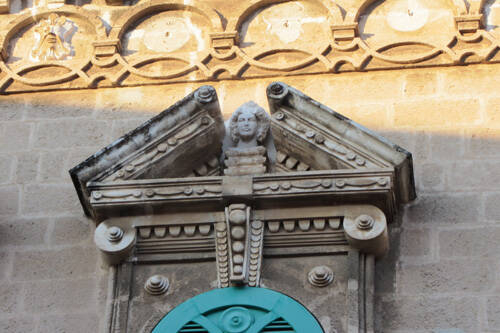
Troviamo una miriade di particolari architettonici presso portali con chiavi recanti data, iniziali, stemmi familiari, per proseguire con gli originali timpani delle finestre, talvolta arricchiti da teste, e maschere, con ornamenti Liberty e con sfingi litiche che sorreggono i balconi.
Nell’area di prima edificazione della città (tra la piazza e via Cadorna), molte delle nuove abitazioni presentano portali, di abitazioni o palazzi, che sembrano trasferiti in toto dai modelli architettonici classicheggianti, abbastanza diffusi “intra moenia”, sia nella forma “ordinaria” che in quella neoclassica e solenne.
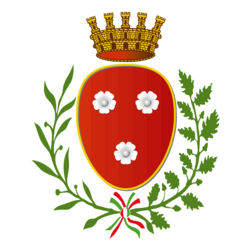
Compaiono anche alcuni stemmi e motivi di ispirazione araldica, per denotare vanti nobiliari , a volte veri, a volte emulati. Il ceto patrizio, del resto, è ancora economicamente forte e le famiglie “storiche” escono dal vecchio Borgo per marcare spazi e presenze anche nel nuovo. Il blasone dei Palmieri, per esempio, compare sia da solo, come in via Cialdini n 16, sia inquartato con quelli di altre famiglie ( vedi in piazza Vittorio Emanuele n 10 e 19). Successivamente, l’ambizione a possedere un proprio blasone resta forte e, che sia araldicamente fondato o no, lo si esibisce scolpito sulla porta d’ingresso.
Il nobile, il patrizio, non ha bisogno di “accorgimenti” per manifestare la propria presenza: egli possiede blasoni e abitazioni che, in ogni caso, si differenziano da quelle del ceto popolare, le quali, tra l’altro, appartengono quasi tutte alla classe nobile, clero compreso. Nel nuovo Borgo, invece, si affacciano i rappresentanti di una borghesia commerciale o agraria, che inaugurano e consolidano la prassi di costruire in proprio l’abitazione. Era di scarsa importanza quindi, se in famiglia manca un blasone: un fregio, le iniziali del nome e una data sono sufficienti per personalizzare l’abitazione.
Infine, a cavallo tra fine Ottocento e primo Novecento, s’impone in Italia l’Art nouveau, detto anche Liberty, con i suoi stilemi e le sue manie capaci di marcare ogni manufatto, dal più piccolo al più grande, caratterizzando fortemente i paesaggi urbani. Non solo i muri, i frontoni, i prospetti, le lesene, ma anche i portoni, le persiane, le balconate in ferro e ghisa, i batacchi, le prese d’aria/luce, le chiavi d’arco, vengono caricati di funzione estetica e inseriti in un contesto armonico, tutto concorre a formare un unicum.

The most aristocratic residences are those of palaces and buildings with more “fashionable” styles and forms, discarding those deemed obsolete.
Urban and architectural models so-called “high” are those that stand out the most. What is opposed to these “high” models is “the other civil building”, existing in most of the Monopolitan area, particularly in buildings beyond the main square called “Borgo”, specifically “bourgeois”, different from the models imposed until now.
In particular, the “borgo murattiano” has specific connotations and styles, because the new civil buildings that impose themselves starting from the first decades of the nineteenth century to continue until the end of the forties of the twentieth century, are located near the major religious buildings.
Palaces often show the external sign of the power of the bourgeois families, committed to form a city patriciate. All the dwellings are part of a complex of architectural choices strongly hierarchized, after the strong social stratification of the city.
In this historical moment, art represent surely the sector of social and cultural life in which Apulia, with its inhabited areas, maintains its most lively facies with many ideas of autonomy. A wide range of styles are imposed: (Greek or Roman neoclassicism, neo-Gothic…) and inevitably the most disparate ones are abolished; nevertheless, what we have there is a such of eclecticism where all the styles coexist at the same time. The Murattian quarter, moreover, turns its back to the old suburb and expands also for reasons related to the population growth.
We found a multitude of architectural details at the portals with keys bearing date, initials, family coats along with the original gables of the windows, sometimes enriched by heads and masks with Liberty ornaments and with lithic sphinxes that supports balconies.
In the area of first construction of the city (between the square and via Cadorna), many of the new apartments show portals of houses or palaces, which seem to be transferred from the classical architectural models, quite popular “intra moenia”, both in ordinary form than in the neoclassical and solemn.
There are also some coats of arms and motifs of heraldic inspirations to denote noble boastings, sometimes true, sometimes emulated. The patrician class, after all, is still economically strong and the “historical” families come out of the old Borgo for marking spaces and presences even in the new. The blazon of Palmieri family, for example, appears alone, as in Via Cialdini n° 16, and with those of the other families (as we can see in Piazza Vittorio Emanuele n° 10 and 19). Subsequently, the ambition to have its own coat of arms remains strong and, whether heraldically founded or not, it’s shown sculpted on the front door.
The noble, the patrician, does not need “expedients” to demonstrate his presence: he has coats of arms and buildings that, in any case, are different from the houses of the popular class, which belong almost all to the noble class, including the clergy. In the new Borgo, instead there are the representatives of a commercial or agrarian bourgeoise, who inaugurate and consolidate the practice of building their own homes. In this way was insignificance if a coat of arms was missing in a family: a frieze, the initial of the name and a date are sufficient to customize the house.
Finally, between the end of the 19th and the beginning of the 20th century, Art Nouveau (also known as Liberty) was established in Italy, with its styles and its obsessions capable of marking all the artefacts, strongly characterizing urban landscapes. Not only the walls, the pediments, the façades, the pilasters, but also the doors, the shutters, the balconies in iron and cast iron, the clappers, the air/light intakes, the keystones, are charged with aesthetic function and included in a harmonic context, and everything contributes to form a unique.
Notizie e testo:
- Centro Regionale dei Servizi Educativi e Culturali Monopoli, “Nel nome di Murat” segni architettonici nel “Borgo”
di Monopoli, Regione Puglia, Assessorato alla Pubblica Istruzione, Vivere In Monopoli, 2001 - Quadernetti
d’identità territoriale n. 4 ).
Testo, Ricerca e Foto a cura di Angela Marasciulo
Servizio Civile 2012 - Comune di Monopoli «Progetto Espressioni d'identità»
[24 Aprile 2013]
Traduzione: Fabrizio Peconio, tirocinio formativo a.a. 2021/22 presso URP