Descrizione
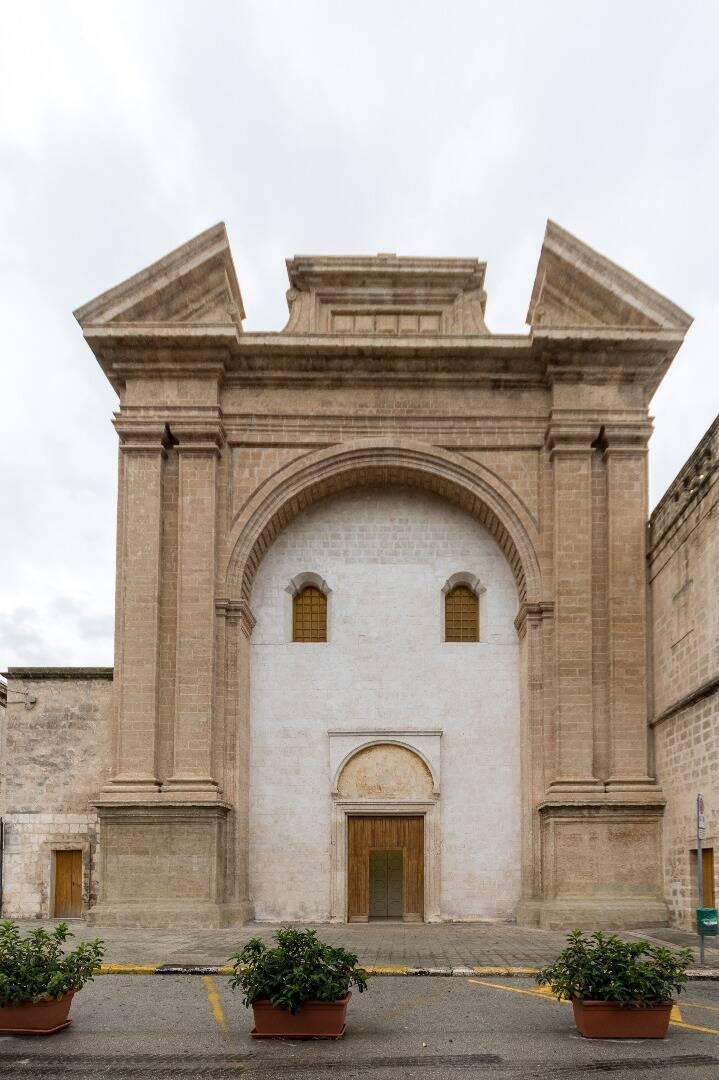
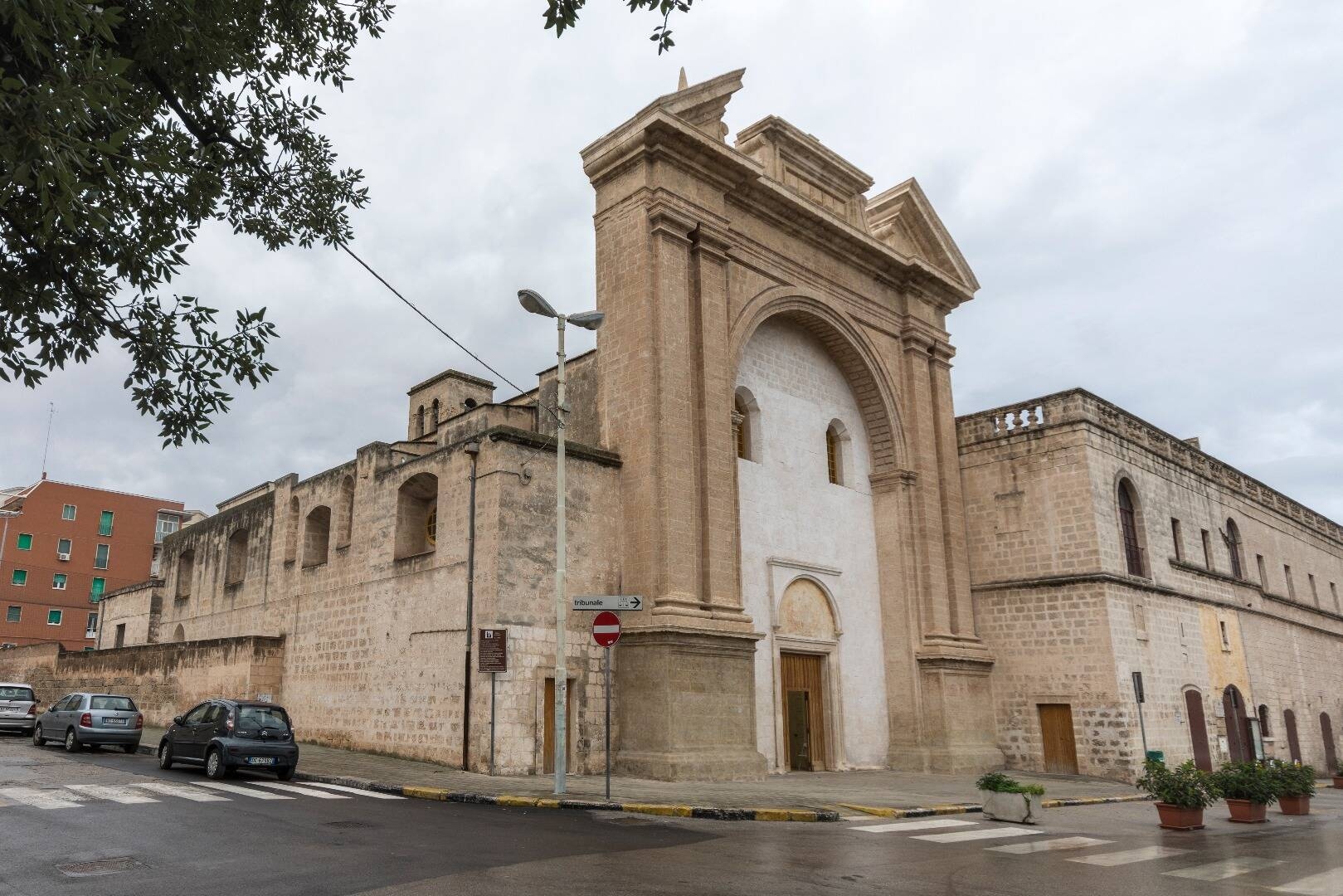
La chiesa e l'ex convento, ai quali la volontà e la devozione dei fedeli hanno dato il titolo di S'Antonio, hanno subito trasformazioni e restauri.
Risale al 1491 l'inizio della costruzione del Convento dei Minori Osservanti (chiamati così perchè rigidi nell'osservanza della regola francescana) avviata con le offerte dei fedeli, mentre il primo contratto riguardante la costruzione della chiesa risale al 1499.
Nella chiesa, allora dedicata a Santa Maria delle Grazie, sono sepolti nobili e personalità locali che ne finanziavano la costruzione di cappelle.
Nel maggio del 1866 i frati lasciarono definitivamente il convento (si rileva che fossero circa 16), sede di noviziato, abbandonandovi documenti, registri e libri andati perduti, con essi scomparvero le fonti per la ricostruzione della storia del convento francescano precedente il 1822.
Il complesso convettuale, che già da qualche anno era stato in parte occupato dal 137° battaglione della Guardia Nazionale Mobile poi trasferitosi, ospitò nel 1866 il 7° reggimento garibaldino Volontari Italiani.
Qualche mese più tardi il comune, il cui sindaco era Francesco Turchiarulo, con deliberazione 7/11/1866 ed ai sensi della Legge del 7/7/1866 chiese al governo nazionale la cessioni del convento, dell'orto e della chiesa per impiantarvi una scuola elementare ed una scuola agraria in considerazione della presenza dell'orto e dell'agrumeto dei frati.
Il 23/4/1867 si deliberò l'istituzione della scuola di agraria per la quale furono apportate degli interventi edilizi.
Intanto i cittadini chiesero al Sindaco di riaprire la chiesa al culto e la giunta municipale nel 1885 deliberò in tal senso, restituendo al Fondo Culto la gestione del luogo.
Solo nel 1949 la chiesa ebbe alcuni locali per le attività parocchiali e finalmente, dopo il 1960 la parrocchia riebbe una parte dell'ex convento che aveva ospitato quando era caserma Umberto di Savoia principe di Piemonte, un battaglione del Genio e poi, a guerra finita sfollati, profughi e sfrattati.
Il complesso conventuale ospita dal 1990 il Conservatorio di Munica "Nino Rota".
Fonte:
"Tra Conventi e Monasteri- Lecase religiose a Monopoli" - Michele Pirrelli - Gelsorosso

The church and the former convent, to which the will and the devotion of the faithful gave the title of S.Antonio, have undergone transformations and restorations. The beginning of the construction of the Convent of the Minor Observants (so called because they strictly observed the Franciscan rule) dates back to 1491, started with the offerings of the faithful, while the first contract concerning the construction of the church dates back to 1499.
Nobels and local personalities who financed the construction of chapels are buried in the church, then dedicated to Santa Maria delle Grazie.
In May 1866 the friars definitively left the convent (it is noted that there were around 16 of them), the seat of the novitiate, abandoning lost documents, registers and books, with which the sources for the reconstruction of the history of the Franciscan convent prior to 1822 disappeared. The convective complex, which for some years had already been partly occupied by the 137th battalion of the National Mobile Guard which then moved, hosted the 7th Garibaldi regiment of Italian Volunteers in 1866. A few months later the municipality, whose mayor was Francesco Turchiarulo, with resolution dated 7/11/1866 and pursuant to the Law of 7/7/1866 asked the national government to transfer the convent, the vegetable garden and the church to establish a primary school and an agricultural school in consideration of the presence of the friars’ vegetable garden and citrus grove.
On 23/4/1867 the establishment of the agricultural school was decided for which some building interventions were carried out.
Meanwhile, the citizens asked the Mayor to reopen the church for worship and in 1885 the municipal council decided to do so, returning the management of the place to the Worship Fund.
Only in 1949 the church had some rooms for parish activities and finally, after 1960 the parish regained part of the former convent which had housed Umberto di Savoia, Prince of Piedmont, an Engineers battalion when it was a barracks and then, once the war was over displaced persons, refugees and evicted.
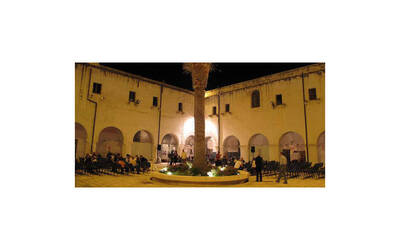
The convent complex has hosted the “Nino Rota” Conservatory of Music since 1990.
Traduzione: Francesco Allegretti, tirocinio formativo a.a.2023/24 presso URP