
Descrizione
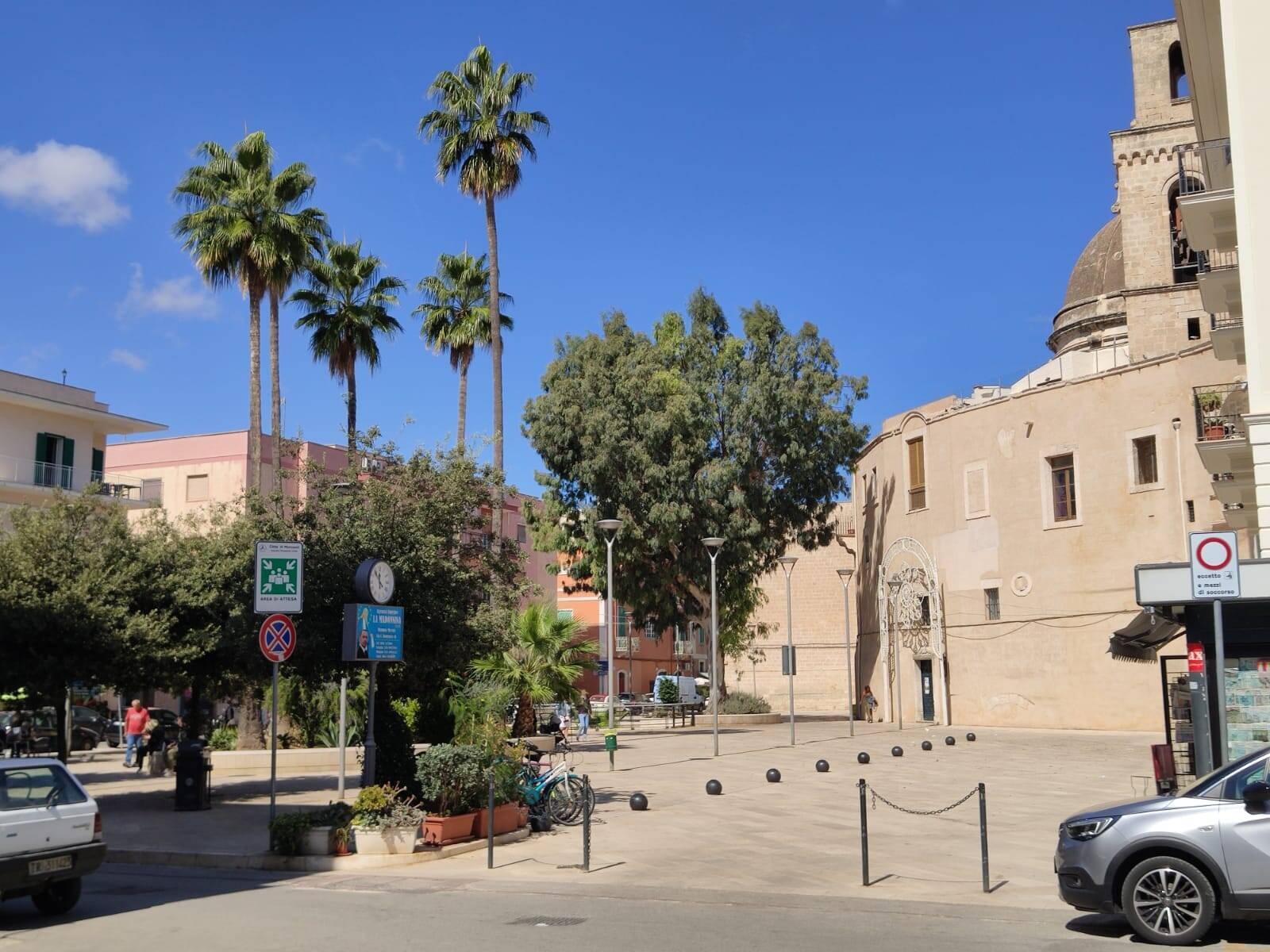
Piazza XX settembre è ubicata nell’omonima via, facilmente riconoscibile per la presenza delle alte palme. La sua bellezza è esaltata dall’ex convento e dalla Chiesa di San Domenico situati alle sue spalle. La piazza rappresenta un punto d’incontro tra l’antico borgo medievale e la città odierna. Il suo nome rimanda al 20 settembre 1870, data della presa di Roma.
In data 26/03/2013 si dava inizio alle operazioni di svellimento della pavimentazione della piazza, affinché potesse essere realizzato un parcheggio sotterraneo a quest’area.
Durante le predette lavorazioni sono stati intercettati, lungo i percorsi di progetto, i resti di un Torrione della città antica e altri manufatti in pietra. Gli archeologi hanno effettuato un’accurata opera di pulizia di tali murature, rendendo possibile la fruizione di tale patrimonio.
Il Bastione di San Domenico era il più imponente tra quelli inseriti nelle mura di difesa della città, fatte risistemare nel 1545 dal Vicerè di Spagna, Don Pedro Alvarez de Toledo, per volere dell’imperatore Carlo V, sotto il cui dominio era allora Monopoli.
Il bastione era il cardine dell’impianto difensivo sul lato terra, come sul mare lo era il Castello. Fu in parte demolito insieme alle mura a partire dal 1841 per congiungere la città medievale al centro ottocentesco.
In questo periodo dunque la parte inferiore fu trasformata in cisterna per la raccolta dell’acqua, smantellando parte delle scale d’accesso e rivestendo le pareti di intonaco impermealizzante.
Con l’intervento di restauro di Piazza XX Settembre è stato riportato in luce assieme al bastione, che aveva un diametro di circa diciotto metri, anche un lungo tratto delle mura, evidenziato con la pavimentazione in graniglia.

Piazza XX Settembre is located in the street of the same name, easily recognizable by the presence of tall palm trees. Its beauty is enhanced by the former convent and the church of San Domenico located behind it. The square represents a meeting point between the ancient medieval village and today’s city. Its name refers to 20 September 1870, the date of the capture of Rome.
On 26/03/2013 the operations to remove the pavement of the square began, so that an underground car park could be built in this area.
During the aforementioned works, the remains of a tower of the ancient city and other stone artefacts were discovered along the project routes. The archaeologists carried out a careful cleaning of these walls, making it possible to use this heritage.
The Bastion of San Domenico was the most imposing among those included in the defense walls of the city, rearranged in 1545 by the Viceroy of Spain, Don Pedro Alvarez de Toledo, at the behest of Emperor Charles V, under whose dominion Monopoli was then.
The bastion was the cornerstone of the defensive system on the land side, just as the Castle was on the sea. It was partly demolished together with the walls starting from 1841 to connect the medieval city to the nineteenth-century centre.
In this period, therefore, the lower part was transformed into a cistern for collecting water, dismantling part of the access stairs and covering the walls with waterproofing plaster.
With the restoration of Piazza XX Settembre, a long stretch of the walls was brought to light together with the bastion, which had a diameter of approximately eighteen metres, highlighted with the grit paving.
Traduzione: Francesco Allegretti, tirocinio formativo a.a.2023/24 presso URP


